
I run an AI SEO agency, which means I spend my days inside these tools on real client accounts. I have sat in Profound's own event (they invited me in 2025), I have burned hours comparing dashboards that disagree with each other, and I have opinions that the vendors will not love. This is the list I wish existed when I started: what each tool actually does, what it costs right now, and what I honestly think.
One thing you will notice researching this category: almost every "review" of these tools is published by a competing vendor. Even Reddit is thin on genuine user threads. That tells you how young this market is, and it is exactly why I am putting my own name and experience on this page instead of paraphrasing someone else's affiliate post.
First: citations vs mentions are not the same thing
Before comparing tools, get the vocabulary right, because the tools measure different things and the difference matters.
- An AI citation is when the engine links your page as a source in its answer. Citations come mostly from live retrieval: the engine searched, found your page, parsed it, and used it to build the response.
- An AI mention is when the model names your brand in the answer text, linked or not. Mentions come largely from what the model learned about you across the whole web, and they are what drives actual recommendations.
If you forced me to pick one, I would pick mentions, because a mention is the AI actively naming and recommending your brand. You can earn mentions without ever being cited: external listicles in your niche, comparison posts on other sites, and Reddit threads all teach models to recommend you. Ahrefs ran a study across 75,000 brands and found that brand web mentions were the single strongest factor correlating with AI visibility (r = 0.664), ahead of anything else they measured.
That does not make citations optional. Citations are content the engine injects and parses, so they subtly shape what the answer says. They also earn backlinks on autopilot, which lifts your domain rating and snowballs: other writers find you through the citation, reference you in their own articles, and those new mentions feed the next model. Cited but never mentioned is losing politely (Seer Interactive documented pages cited 100+ times while the AI recommended competitors by name). The play is to win both, and they reward different content: citations favor structured, evidence-heavy material (data, studies, numbers, deep research) across the whole funnel, while mentions are won mostly in bottom-of-funnel surfaces: comparison content, alternatives pages, niche tool lists, external listicles, and Reddit. This is exactly why listicles are the meta right now: they are structured enough to get cited and relevant enough to drive mentions. I go deeper in AI mentions vs citations.
The tools, ranked
A note on prices: this category reprices constantly. Profound has flip-flopped between sales-led and public pricing, Peec changed plans in March 2026, and Scrunch was acquired by Sitecore in June 2026. Every price below was checked in June 2026 against vendor pages where possible and flagged where only third-party trackers report it.
| Tool | Best for | Pricing | Capabilities |
|---|---|---|---|
| RankCite Analytics | Visibility tied to clicks and revenue | Free to start | GSC + GA4 in one view, prompt tracking, revenue attribution |
 Profound Profound | Enterprise AI search teams | From $99/mo; real power $3k+ | Citations, mentions, sources, prompt volumes, marketing agents |
 Peec AI Peec AI | Mid-size marketing teams | From ~$95/mo | Visibility, sentiment, and position per prompt across engines |
 Otterly.AI Otterly.AI | Affordable first monitor | From $29/mo | Mentions + link citations, 4 engines (more as add-ons) |
 Ahrefs Brand Radar Ahrefs Brand Radar | Ahrefs-native teams | $199+/mo add-on | 7 AI surfaces, unlinked mentions, share of voice + full SEO suite |
 Semrush AI Visibility Semrush AI Visibility | Cheapest big-suite entry | $99/mo standalone | 5 engines, sentiment, prompt research, AI crawlability audit |
 Scrunch AI Scrunch AI | Agent-readiness of your site | From $300/mo | Persona tracking, hallucination detection, agent experience |
 AthenaHQ AthenaHQ | Action lists, not dashboards | $295/mo self-serve | Recommendations engine, AI crawler analytics, 8+ models |
Prices checked June 9, 2026. RankCite Analytics is our own product; the rest are independently researched. Click a tool name to jump to its full review.
RankCite Analytics
by RankCite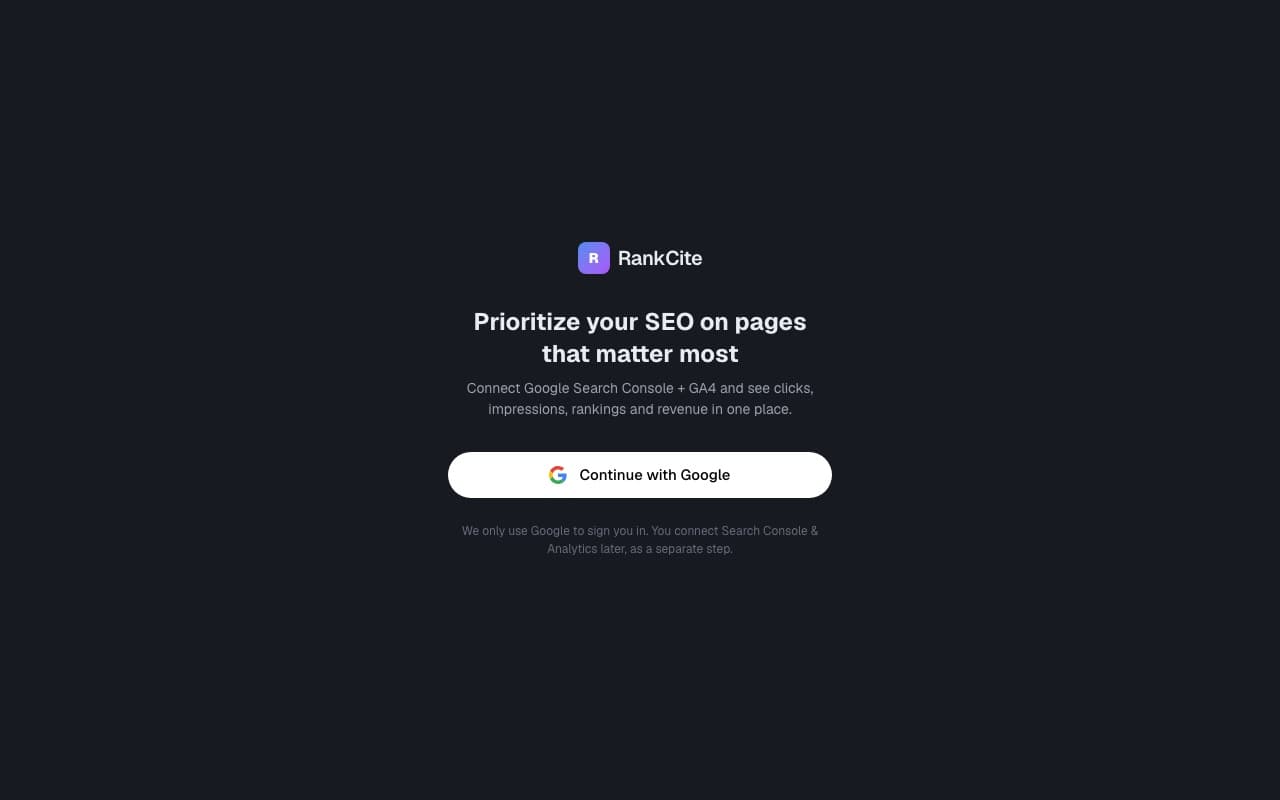
Best for
Founders and marketing teams who want AI-era search performance tied to actual clicks and revenue, not just visibility scores
Pricing
Free to start: sign in with Google and connect Search Console + GA4
RankCite Analytics is the app we built and use in-house: you sign in with Google, connect Search Console and GA4, and get clicks, impressions, rankings, and revenue in one place, with prompt tracking layered on top. It exists because visibility without revenue attribution is trivia.
Pros
- Connects Google Search Console and GA4 in one view: clicks, impressions, rankings, and revenue together
- Built around prompt tracking, so you see AI-era queries next to classic search data
- No enterprise sales call required to get value on day one
Cons
- Young product compared with the enterprise platforms below
- We built it, so discount my enthusiasm accordingly

Gonçalo's take
Full disclosure: this is ours, so I am biased and you should weigh that. We built it because every tool below tells you that you appeared in an answer, and almost none of them tell you what that did to your traffic and revenue. Connecting GSC and GA4 to prompt tracking closes that loop. It is the first thing I open for our own clients.

Profound
Best for
Enterprise teams running AI search as a primary channel that need board-ready citation and source reporting
Pricing
Starter $99/mo (ChatGPT only, 50 prompts), Growth $399/mo (3 engines, 100 prompts, 6 optimized articles), Enterprise custom. The differentiating features sit in enterprise tiers that in practice start around $3k/mo
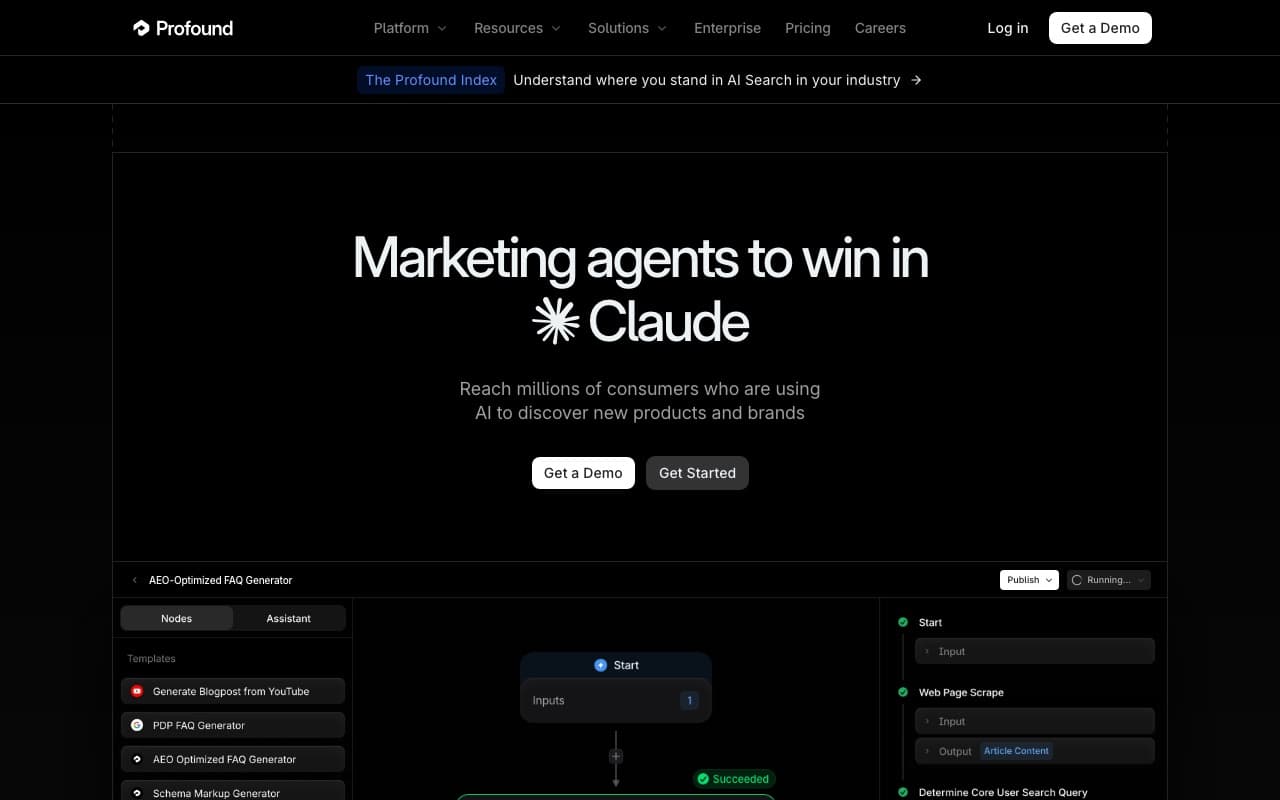
One of the earliest dedicated answer-engine analytics platforms and still the reference point everyone else gets compared to. Profound tracks citations, mentions, and sources across the major engines, and has been visibly pivoting toward what they call marketing engineering: automated agents that act on the data instead of just reporting it.
Pros
- Prompt volume data acquired from third-party providers, arguably the most accurate prompt volumes in the market
- Ranked #1 in its G2 category (around 4.6/5 across 300+ reviews), with SOC 2 and a real API
- Moving fast: now building automated marketing-engineering workflows, not just dashboards
Cons
- Entry tiers are limited (Starter is ChatGPT-only, Growth caps at 3 engines); everything that makes Profound special is enterprise-gated
- In practice the most expensive option on this list once you buy the features worth buying
- Steep onboarding: reviewers report a 4 to 8 week ramp-up for non-technical teams
Gonçalo's take
Profound is the strongest dedicated platform in this list, and I say that having attended their event in 2025 and used the product. Their edge is data: the prompt volumes they acquire from third-party providers are arguably the most accurate available. But know what you are buying: $99 and $399 get you visibility tracking, prompt volumes, and a handful of content pieces. The genuinely interesting capabilities live in plans that in practice start around $3k/mo, which makes Profound the priciest real deployment here. Their homepage now leads with marketing agents, not dashboards: they are betting visibility reporting alone is not a durable business, and I think they are right.

Peec AI
Best for
Mid-size marketing teams that want serious multi-engine tracking with dashboards normal humans can read
Pricing
Per April 2026 trackers: Starter $95/mo (50 prompts), Pro $245/mo, Advanced $495/mo, enterprise custom; free trial, unlimited seats (verify on peec.ai, they repriced in March 2026)
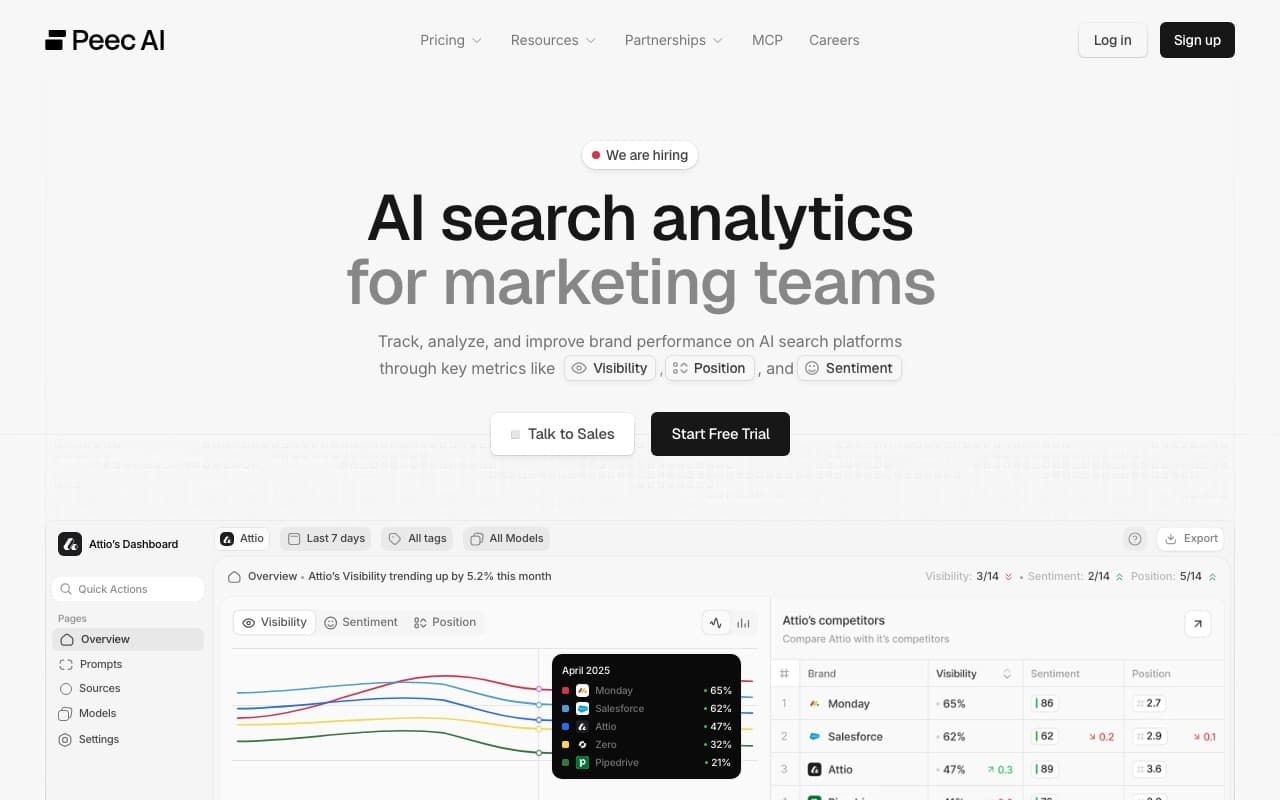
A focused AI search analytics platform from Europe that tracks brand visibility, sentiment, and position across ChatGPT, Perplexity, Gemini, and AI Overviews, with per-prompt drilldowns and competitor comparisons.
Pros
- Clean visibility, position, and sentiment tracking per prompt across engines
- Strong competitor benchmarking out of the box
- Unlimited seats on every plan, and users praise the direct line to the founders
Cons
- Prompt allowances push growing teams into higher tiers quickly
- No retroactive data: tracking starts the day you do, so start before you need the history
Gonçalo's take
Peec is what I point mid-size teams to when Profound is overkill. The dashboards hit the right altitude: visibility, sentiment, and position per prompt without drowning you in modeling assumptions. It has been one of the fastest-improving products in the category.

Otterly.AI
Best for
Smaller brands and solo marketers who want affordable monthly monitoring before committing real budget
Pricing
Lite $29/mo (15 prompts), Standard $189/mo (100 prompts), Premium $489/mo (400 prompts); some engines like Gemini and AI Mode are paid add-ons
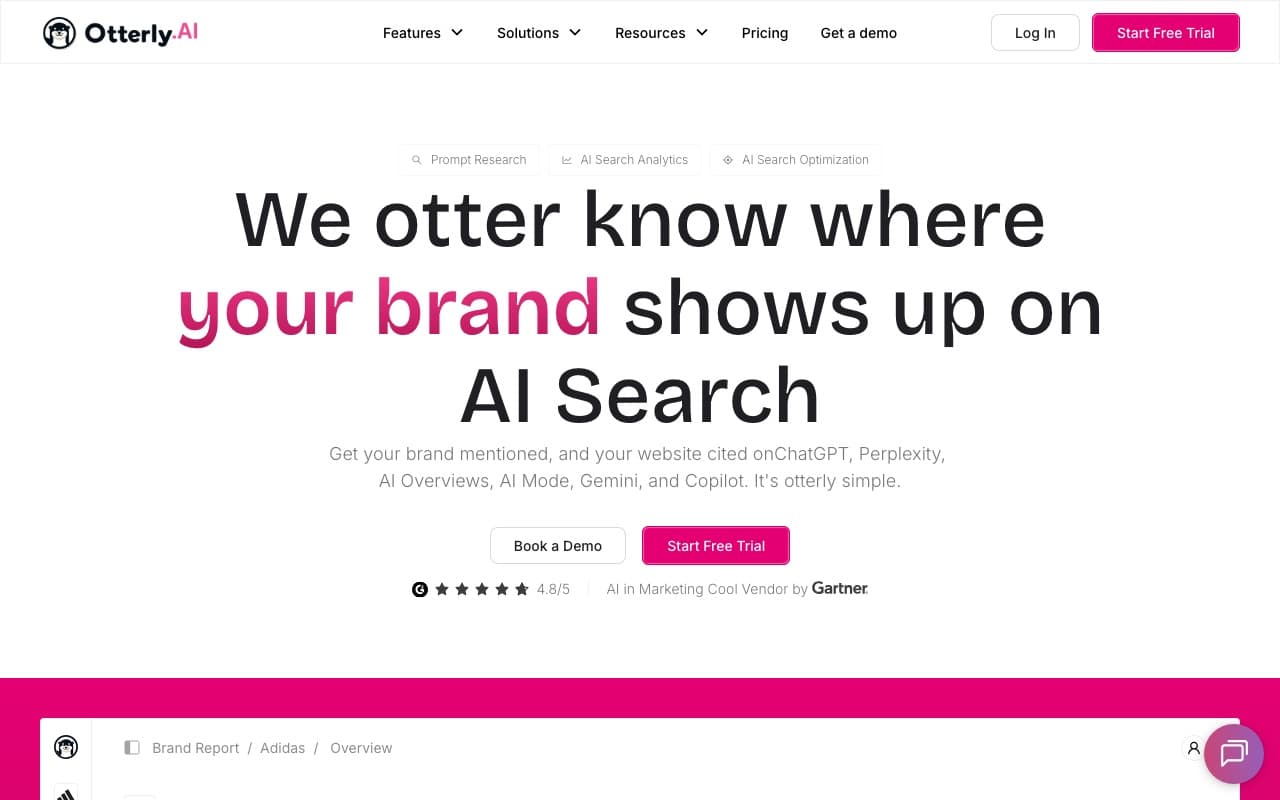
Otterly monitors brand mentions and link citations across ChatGPT, Perplexity, Google AI Overviews, AI Mode, Gemini, and Copilot, with scheduled monitoring and a Gartner Cool Vendor nod to its name.
Pros
- One of the most affordable entry points in the category
- Tracks both brand mentions and link citations, and is clear about the difference
- Simple setup: useful data within the first hour
Cons
- The advertised six-engine coverage is only true after paid add-ons for Gemini and AI Mode
- One reviewer found no consistent link between tracked AI mentions and actual traffic, exactly the attribution gap this category has
Gonçalo's take
The sensible first subscription. If you are not sure AI search matters for your category yet, spending enterprise money to find out is silly. Otterly answers the question cheaply, and its mention vs citation split is honest. Graduate to Profound or Peec when the answer is yes.

Ahrefs Brand Radar
Best for
Teams already living in Ahrefs that want AI visibility next to the best keyword and backlink data in the industry
Pricing
Paid add-on on top of an Ahrefs plan (from $129/mo): roughly $199/mo per AI platform index or $699/mo for all platforms, with custom prompt packs from $50/mo
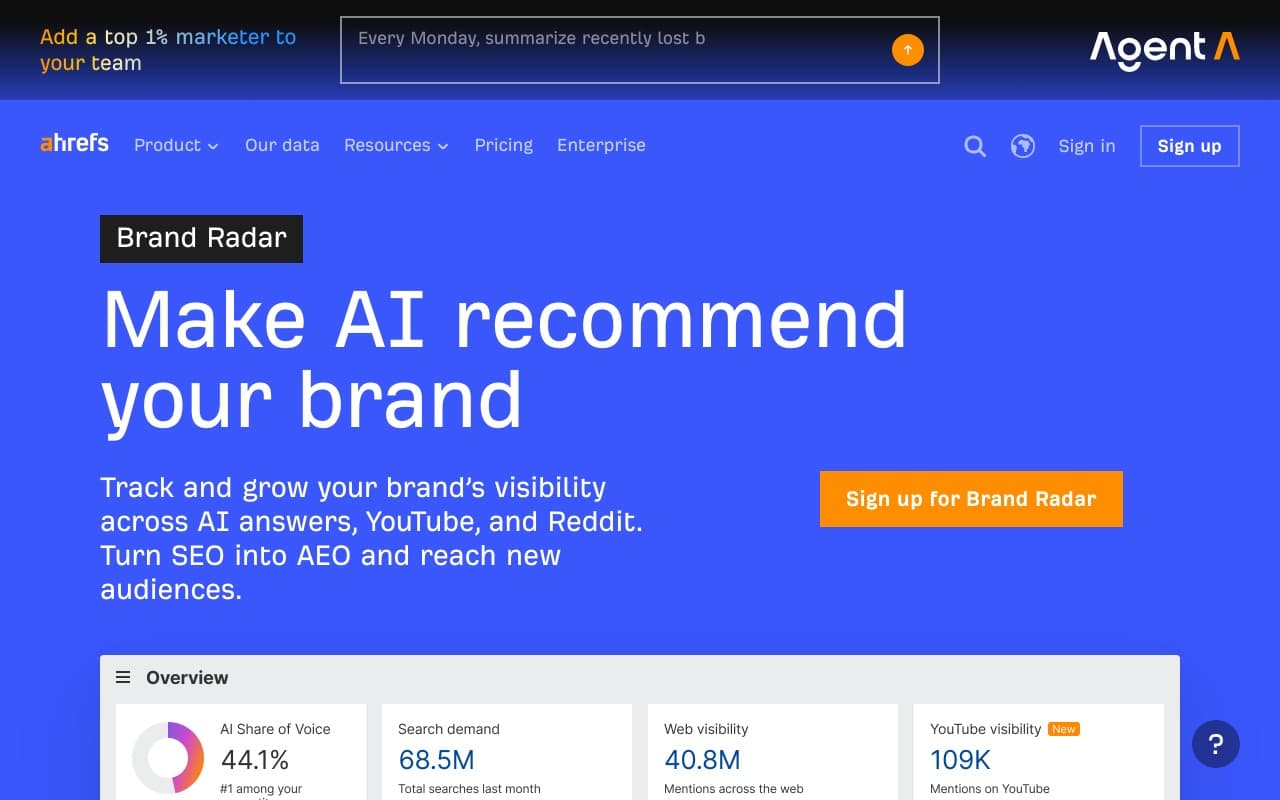
Ahrefs bolted serious AI tracking onto the most respected dataset in SEO. Brand Radar covers AI Overviews, AI Mode, ChatGPT, Gemini, Perplexity, Copilot, and Grok, with mentions, citations, share of voice, and even YouTube and Reddit visibility in beta.
Pros
- Prompt database modeled from real search behavior (hundreds of millions of monthly prompts), not synthetic queries
- Catches unlinked mentions using Ahrefs' mature web crawler
- AI visibility next to the keyword and backlink data Ahrefs is famous for
Cons
- Gets expensive fast: realistic all-in cost lands around $800+/mo for full platform coverage
- Tells you that you appeared, not what it did to clicks or revenue
- No Claude tracking at the time of writing
Gonçalo's take
My honest take on Ahrefs: the product to buy it for is the data. Their keyword data is the best in the industry, and Brand Radar inherits that DNA, with prompts modeled from real search behavior instead of made-up queries. But I would not call it the number one AI visibility tool. It is the right answer for Ahrefs-native teams and the wrong first tool for everyone else, mostly because of how the add-on pricing stacks.

Semrush AI Visibility Toolkit
Best for
Teams that want the cheapest credible entry into AI tracking from a major suite, without an enterprise contract
Pricing
$99/mo standalone (no Semrush subscription required): 1 domain, 25 tracked prompts; extra 50 prompts $60/mo, extra domain $99/mo
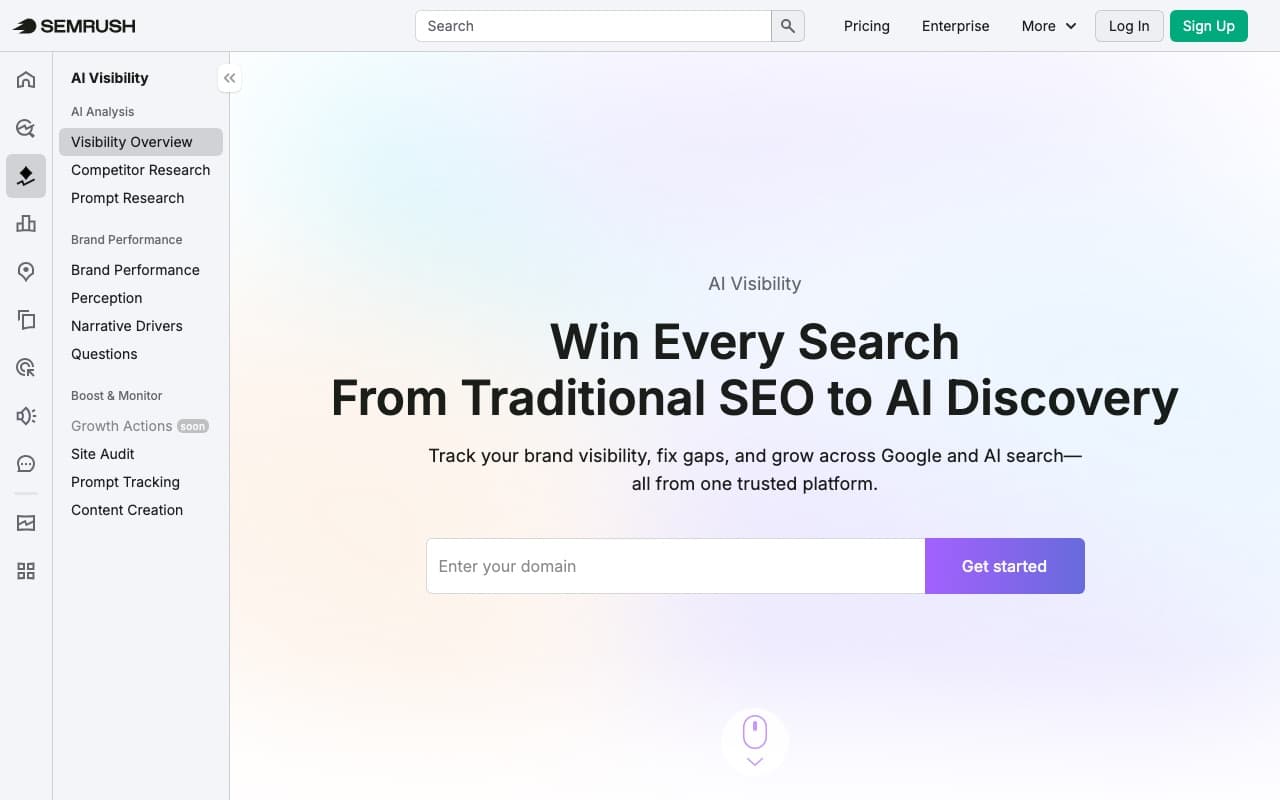
Semrush's AI Visibility Toolkit tracks brand performance across five engines with share of voice, sentiment, prompt research, and an AI search site audit, backed by a 261M+ prompt dataset.
Pros
- Cheapest entry point among the big suites, and it works standalone
- Prompt research plus sentiment plus an AI crawlability audit in one package
- Daily prompt tracking across ChatGPT, AI Overviews, AI Mode, Gemini, and Perplexity
Cons
- 25 prompts is thin: realistic usage pushes you into add-ons quickly
- No Claude, Grok, or Copilot coverage at the time of writing
- Less transparent than Ahrefs about where its prompt data comes from
Gonçalo's take
The $99 standalone price is the smartest move in this category: it lets a skeptical team test AI visibility without betting the budget. Just go in knowing 25 prompts disappears fast once you start tracking real buying queries against competitors. Semrush being an Adobe company now also tells you where this market is heading: into the big platforms.

Scrunch AI
Best for
Brands worried about how AI agents experience their site, not just how answers describe them
Pricing
Starter $300/mo (3 seats, 350 custom prompts), Growth $500/mo, enterprise custom; annual saves 17%
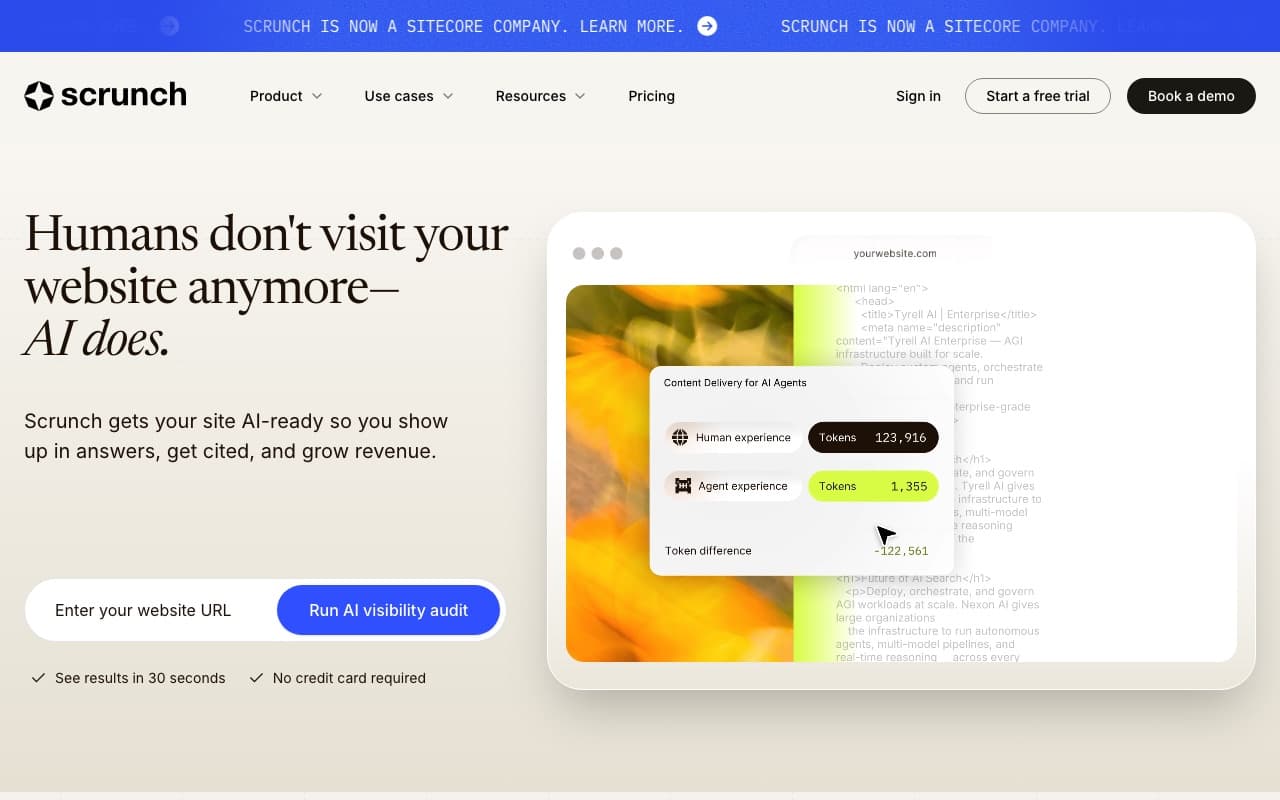
Scrunch positions around the full AI buyer journey: how engines and agents see, describe, and traverse your brand, with an AI visibility audit as the front door. As of their recent acquisition, Scrunch is now a Sitecore company.
Pros
- Frames the problem correctly: AI agents are becoming the visitor, and it can serve them optimized content
- Hallucination detection and GA integration for AI referral traffic
- Fast-shipping team, well reviewed on G2 (around 4.6/5)
Cons
- Prompt credits count per engine, so plans max out much faster than the headline numbers suggest
- The differentiating features (hallucination detection, agent experience at scale) sit behind Enterprise
Gonçalo's take
Scrunch's homepage says it plainly: humans do not visit your website anymore, AI does. That framing is right. And the fact that Sitecore just bought them (announced June 2026, reportedly around $225M) proves the point I make at the end of this article: standalone AI visibility is consolidating into bigger platforms before our eyes.

AthenaHQ
Best for
Teams that want the tool to propose the to-do list, not just report the numbers
Pricing
Self-serve $295/mo (3,600 credits, 8+ models, unlimited seats, 1 country), first month discounted; enterprise custom
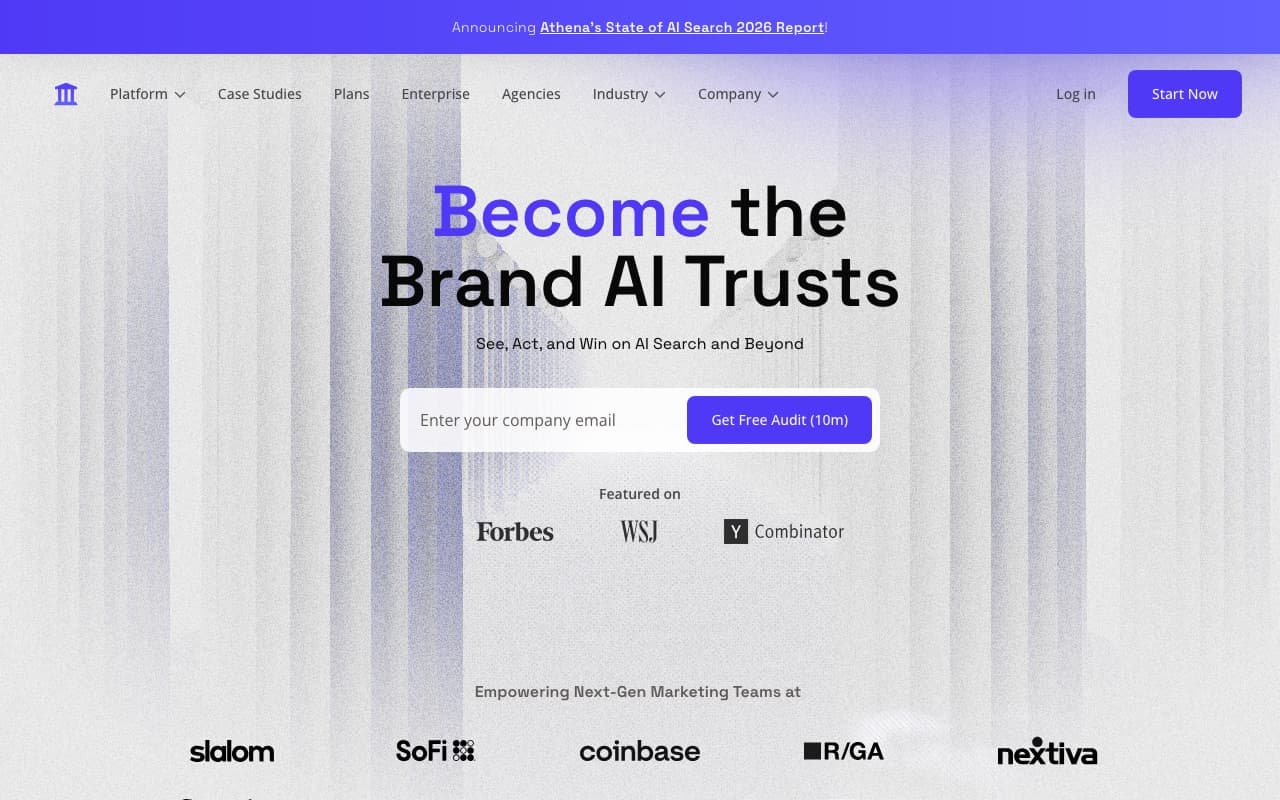
AthenaHQ pitches itself as the platform to become the brand AI trusts, combining visibility tracking with concrete, prioritized recommendations on what to fix.
Pros
- Most action-oriented tool here: a recommendations engine and task list, not just charts
- AI crawler traffic analytics with GA4 and Shopify integration, treating AI as an attributable channel
- Y Combinator-backed, ex-Google founders, iterating fast
Cons
- Credit-based pricing makes monthly costs unpredictable, and self-serve covers one country
- The flagship features (citation engine, prompt volumes) sit behind the Enterprise wall
Gonçalo's take
Athena's bet is that monitoring is table stakes and prioritized recommendations are the product. I agree with the bet. For teams without an agency or in-house GEO specialist, a tool that says do these five things this month is worth more than another dashboard.
9. Manual prompt testing (free, do this first)
Before paying for anything: write 20 buying prompts your customers would actually ask, run them across ChatGPT, Perplexity, and Gemini, and log who gets named and who gets cited. One hour, zero dollars, and you will know whether you have an AI visibility problem. Every client engagement we run starts exactly this way, tools or no tools.
How to choose
| If you... | Start with |
|---|---|
| Want visibility tied to clicks and revenue | RankCite Analytics |
| Run AI search as a primary channel with budget | Profound |
| Want strong tracking without enterprise pricing | Peec AI or Otterly.AI |
| Already pay for Ahrefs or Semrush | Their AI add-ons |
| Want a to-do list, not a dashboard | AthenaHQ |
| Have zero budget | Manual prompt testing |
Where I think this category is going
Here is the opinion part, and I hold it strongly: AI visibility tracking by itself will become a commodity. The signs are everywhere in this list. Profound is pivoting from dashboards to marketing agents. Scrunch sold to Sitecore. Semrush sits inside Adobe. Ahrefs and Semrush both bolted AI tracking onto existing suites within a year.
Play it forward: OpenAI and Anthropic have every incentive to ship their own version of a search console, the way Google did when webmasters flew blind. The moment a ChatGPT ads business matures, prompt volume estimates become a public currency the way keyword volumes did. When that happens, raw visibility data stops being worth $700 a month, and the value moves to two places: tools that connect visibility to revenue, and the work of actually changing what AI says about you. That second part is answer engine optimization, and no dashboard does it for you.
That is the lens behind this ranking: I weighted tools that act or attribute over tools that only observe. For the strategy these tools serve, start with GEO vs SEO or the how to rank on ChatGPT playbook. And if you want us to run the whole motion for you, that is what we do, audit free.
AI visibility tools: frequently asked questions
What is an AI visibility tool?
An AI visibility tool tracks where and how often your brand appears in AI search answers across engines like ChatGPT, Claude, Perplexity, and Gemini. The better ones separate AI citations (your page linked as a source) from AI mentions (your brand named in the answer) and connect that to your real traffic. For the dedicated tracker, see RankCite's AI visibility tracker.
How much do AI visibility tools cost?
Pricing in 2026 ranges widely. Entry tools like Otterly start around $29 a month, mid-tier trackers like Peec AI sit around 90 euros a month, and enterprise platforms like Profound run from a few hundred to several thousand a month once you add engines and prompt volume, which I break down in what Profound actually costs. RankCite Analytics is $49 a month for tracking plus the agents to act on it. Always confirm current pricing, because it moves fast.
Is there a free AI visibility tool or checker?
Yes. You can preview how your brand shows up across the major engines with our free AI visibility checker, no account needed. Most paid tools also offer trials. Free tools are good for a snapshot; paid tools track the trend over time.
What is the most affordable AI visibility tool?
For pure tracking on a budget, Otterly and Peec AI are the cheapest credible options. If you want tracking plus the work to improve your visibility in the same place, RankCite Analytics at $49 a month is the best value, because you are not paying separately for a dashboard and then for someone to act on it.
What is the best Profound alternative?
It depends what you need: cheaper tracking with Peec AI or Otterly, GEO-focused workflows with AthenaHQ, or tracking plus execution with RankCite. I compare them in detail in Profound alternatives.
Which AI visibility tool tracks the most AI engines?
Coverage varies by tier. Most serious tools track ChatGPT, Perplexity, Gemini, and Claude; some add Copilot and Mistral. Engine coverage is usually gated behind higher plans, so check the specific tier rather than the marketing page.
Do AI visibility tools track AI citations and mentions separately?
The good ones do, and it matters. A citation and a mention are won with different content and have different value, which I unpack in AI mentions vs AI citations. Tools that blend them into a single visibility number hide the signal you actually need.
Should I use an AI visibility tool or hire an agency?
A tool tells you where you stand. An agency does the work to improve it. If you have a team to act on the data, a tool is enough. If you want outcomes rather than dashboards, an AI SEO agency or GEO agency runs the whole motion. Many teams use both.

Written by
Gonçalo Canhoto
Founder of RankCite. I help B2B companies get clients from AI search: ChatGPT, Perplexity, Claude, and Gemini. My work includes taking a client to $100,800 in 27 days by ranking #1 on ChatGPT and growing a fintech from $300k to $5M in monthly revenue with AI search as the channel. I publish what I learn, including the parts that did not work.
Watch my breakdowns on YouTube